Henon Near-Crisis (a=1.43)
iterated-maps · 37 views
iterated-mapsintermittent
What It Is
Henon map at a=1.43, b=0.3 --- just past the boundary crisis (~1.427) where the attractor has become a chaotic saddle: orbits stay chaotic for a long transient (~300 steps) then escape, so the emitted signal is a train of transient-chaos bursts separated by re-injection
Interpretation
Standard analysis sees: heavy-tailed; left-skewed; time-irreversible (slow rise, sharp collapse). The atlas additionally detects discrete-map sensitive dependence, Time Reversibility:ordinal_reversal_distance. It sits beside Zipf Distribution in the atlas (standard-bank rank 65) — a neighbor conventional features miss.
What standard analysis sees
tail heaviness0.88
asymmetry0.01
occupancy0.36
short-range corr0.19
long-range memory0.42
spectral colour0.63
periodicity0.21
complexity0.43
time-irreversibility0.10
volatility clustering0.45
multifractality0.46
dimensionality0.77
nonstationarity0.51
What the atlas adds
discrete-map sensitive dependence+3.5z
deterministic chaos (positive λ_max, sensitive dependence)
names a discrete-map-scoped estimate, NOT chaos in general — continuous-flow chaos (Lorenz, Rössler) reads weak/neutral here despite being genuinely chaotic; spiky arithmetic sources can false-positive on the finite-time estimateTime Reversibility:ordinal_reversal_distance+2.5z
time-reversal symmetry breaking via Bandt-Pompe ordinal patterns
Atlas-extreme metrics the standard bank can’t predict for this source
Hölder Regularity:alpha_autocorrelation | +3.3z | bank-miss 1.2σ |
Composition
dtypefloat64
range[-9.836, 1.27]
unique values16384 / 16384
mean ± std0.163 ± 0.834
Render Gallery
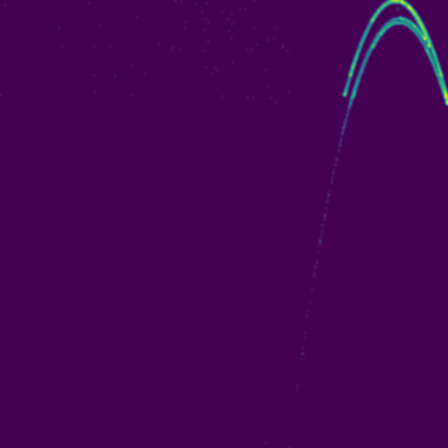
Native > phase_plotraw
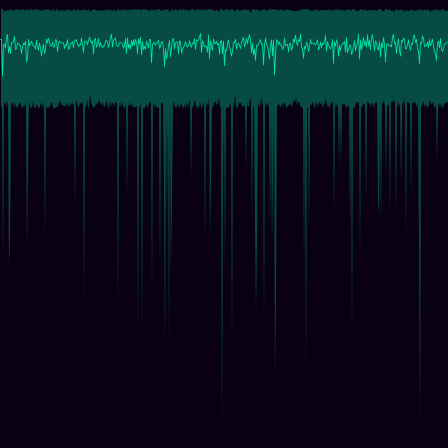
Native > timeseriesraw
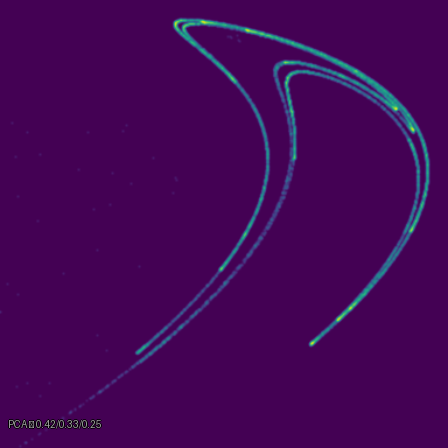
Native > triple_latticeraw

Boltzmann > lag_map
Boltzmann > spin_grid
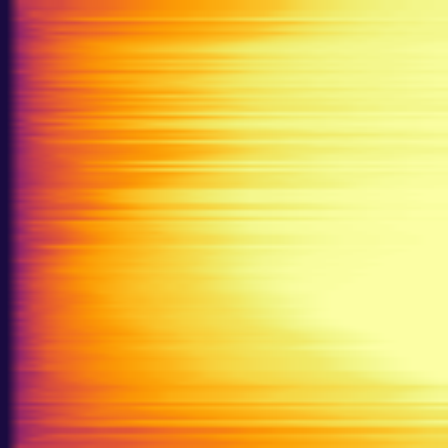
Cayley > default
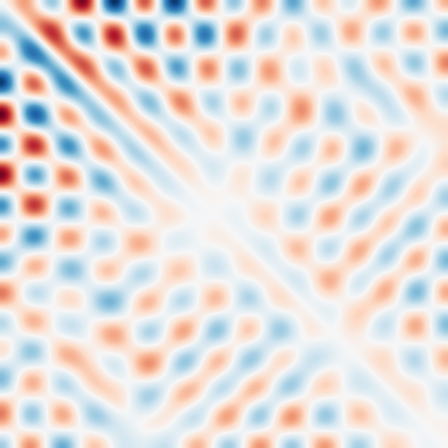
Chladni > free_plate_nodal
Chladni > plate_bottom
Chladni > plate_top
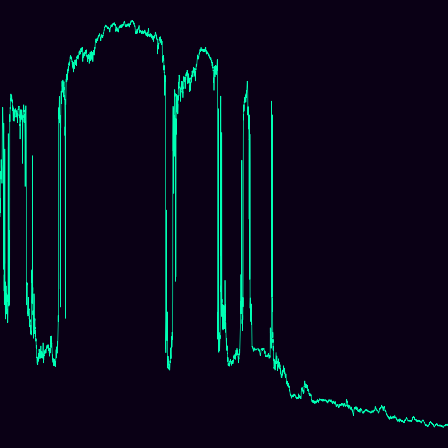
Heisenberg (Nil) (centered) > signed_log_z
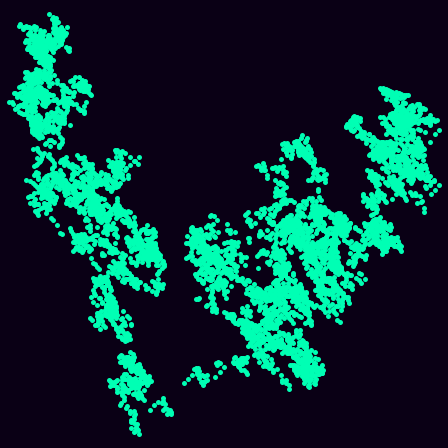
Heisenberg (Nil) (centered) > xy_path
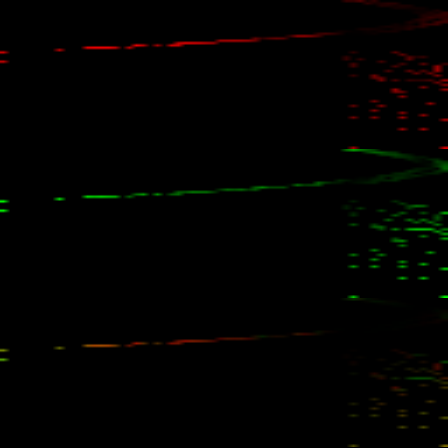
Hodge–Laplacian > default
Inflation (Substitution) > barcode
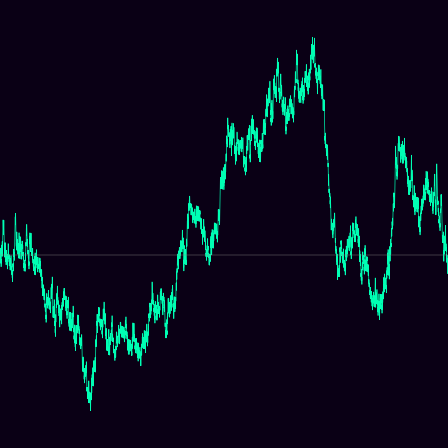
Inflation (Substitution) > d_curve
Information Theory > default
Julia Set > escape_histogram
Klein Bottle > default
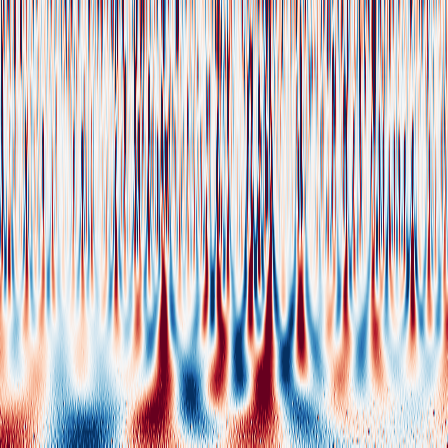
Laplacian > default
Logarithmic Spiral > default

Möbius-S³ > mobius_cylinder

Möbius-S³ > s2_base_map
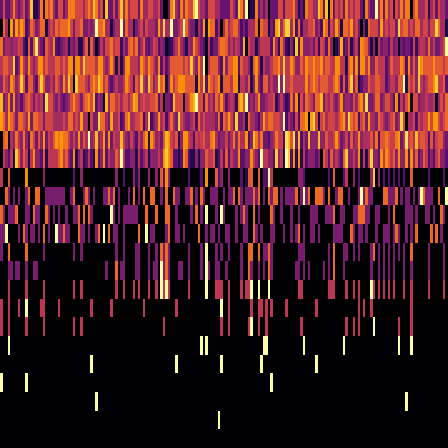
Ordinal Partition > default
Penrose (Quasicrystal) > phi_spectrum
Persistent Homology > barcode
Persistent Homology > h1_diagram
Predictability > default
Recurrence Quantification > default
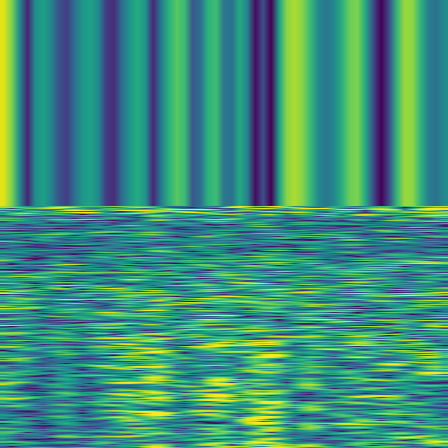
Spectral Analysis > default
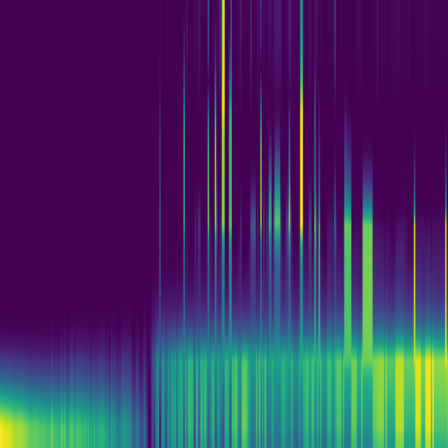
Spectral Graph > default
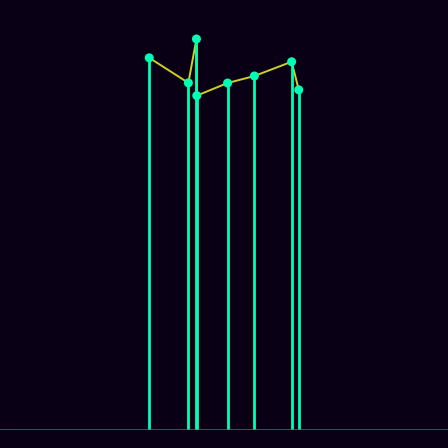
Spirograph > mode_spectrum
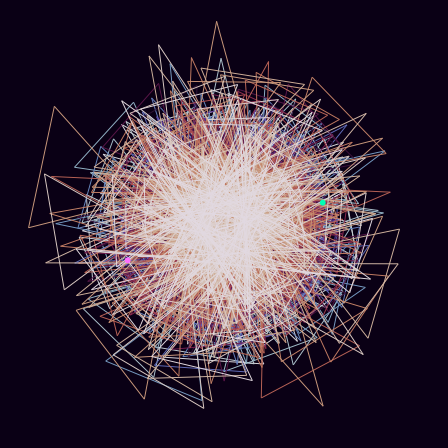
Spirograph > phasor_trajectory

Symplectic > flux_grid
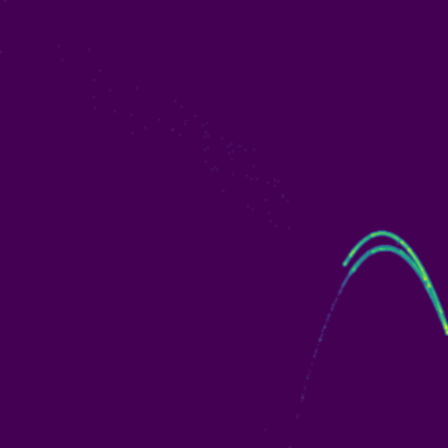
Symplectic > phase_space
Ulam Spiral (Sacks) > default
Ulam Spiral (Square) > default
Visibility Graph > default
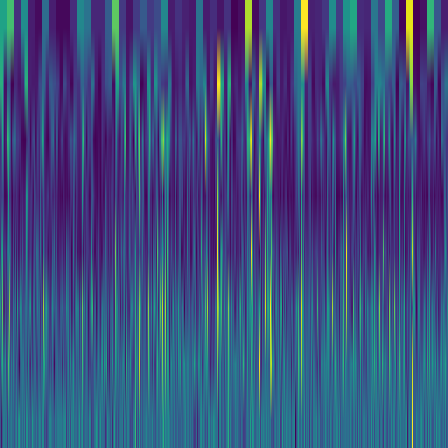
Wavelet Cascade > default
Atlas Position
| Nearest neighbor | Distance | |
|---|---|---|
| Collatz Flights | 4.59 | cross-origin |
| Henon Map | 4.89 | |
| Zipf Distribution | 4.90 | cross-origin |
Which Geometries Light Up
Catch24 › Catch24:DN_Mean | rank 3/306 | 0.8984 |
Zipf–Mandelbrot (8-bit) › Zipf–Mandelbrot (8-bit):hapax_ratio | rank 4/306 | 0.3226 |
← / → within domain · ⇧← / ⇧→ alphabetical · ⇧← / ⇧→ inside an open render = same view across sources