Free Group F₂ Walk
What It Is
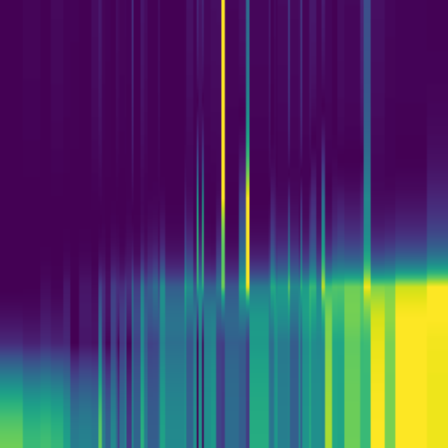
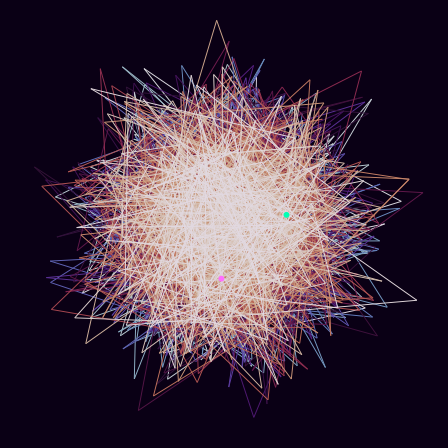
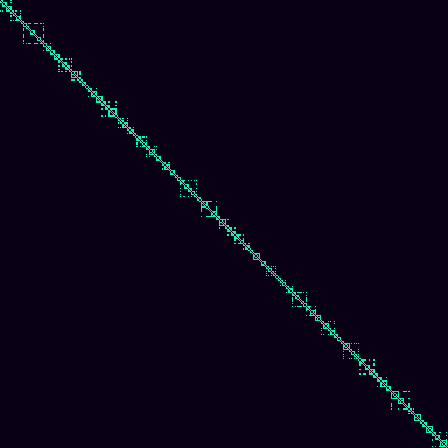
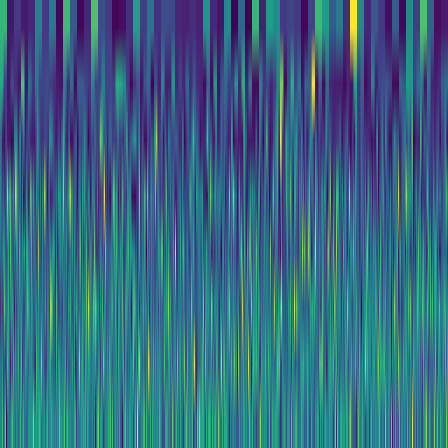
Non-backtracking random walk on the Cayley graph of the free group F₂ = ⟨a, b⟩ --- the 4-regular tree, canonical δ-hyperbolic (δ=0) space. At each step the next generator is drawn uniformly from {a, a⁻¹, b, b⁻¹} excluding the inverse of the previous step, so the walk strictly extends a reduced word. Emits step labels as a 4-level uint8 sequence {0, 85, 170, 255}. Word length grows linearly in step count (tree metric) while ball volume grows like 4·3^{n-1} (exponential) --- the textbook Gromov-hyperbolic positive control for Cayley:delta_hyp_norm, growth_exponent, saturation_radius, spectral_gap.
Interpretation
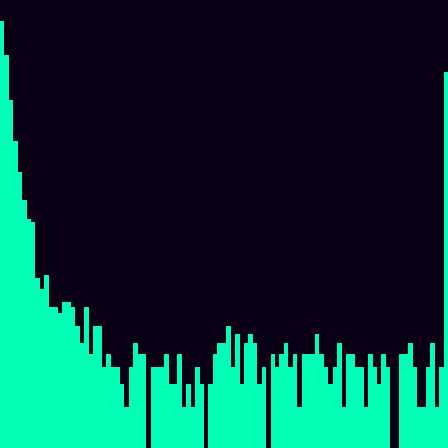
Standard analysis sees: bounded / light-tailed; anti-correlated (alternating); blue spectrum (high-frequency power). The atlas finds no named structure, but the source is distinctively extreme on Zariski:algebraic_residual (+2.7z) — beyond what the standard bank predicts for it. It sits beside Codon Usage in the atlas (standard-bank rank 35) — a neighbor conventional features miss.
Zariski:algebraic_residual | +2.7z | bank-miss 2.3σ |
Composition
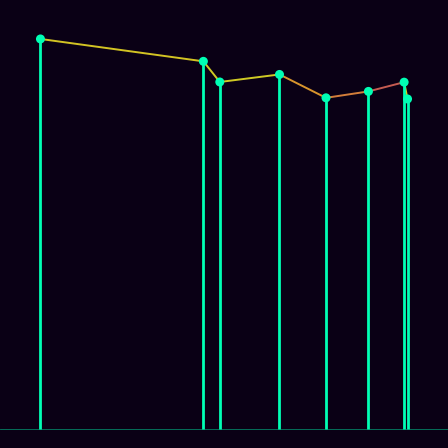
Fixed alphabet — only 4 distinct symbols across 16384 samples.
Render Gallery

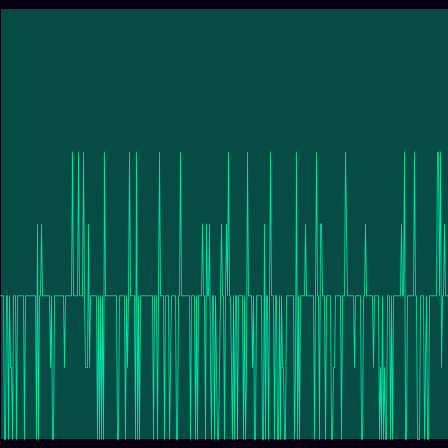
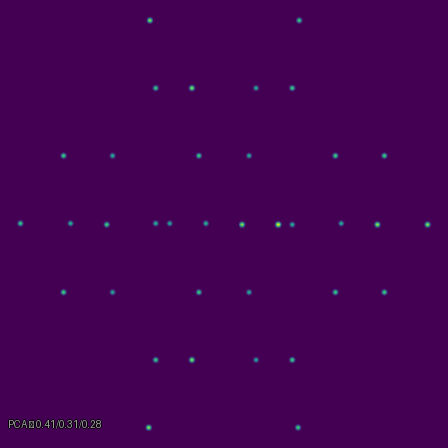
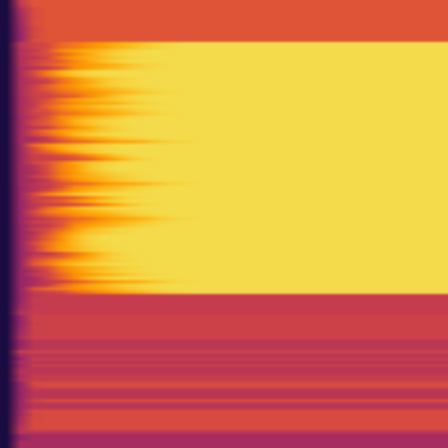
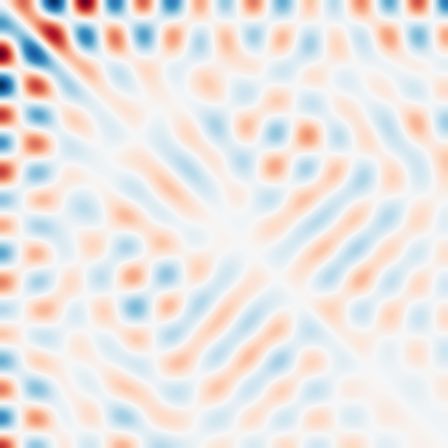
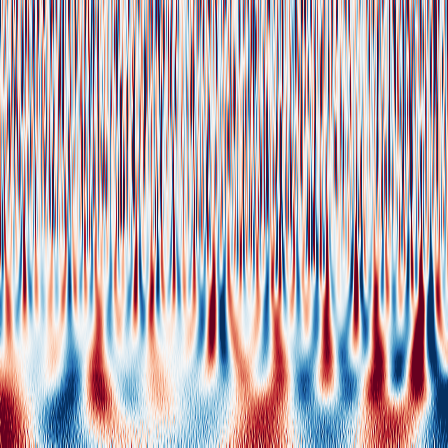
_(centered)/signed_log_z/Free_Group_F₂_Walk.png)
_(centered)/xy_path/Free_Group_F₂_Walk.png)
/barcode/Free_Group_F₂_Walk.png)
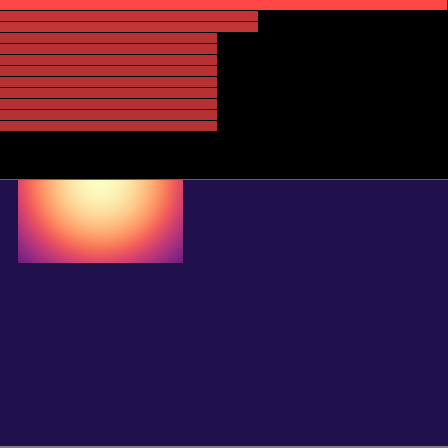
/d_curve/Free_Group_F₂_Walk.png)


/phi_spectrum/Free_Group_F₂_Walk.png)

/default/Free_Group_F₂_Walk.png)
/default/Free_Group_F₂_Walk.png)
Atlas Position
| Nearest neighbor | Distance | |
|---|---|---|
| Phi-Squared β-Shift | 3.82 | |
| Dice Rolls | 3.91 | cross-origin |
| Codon Usage | 3.92 | cross-origin |
Which Geometries Light Up
Boltzmann › Boltzmann:nn_dominance | rank 3/306 | 3.7782 |